From November 24 to 30, 2025, the international artist residency Queering the Myth took place in Naples, in organization by the Italian curatorial collective Collettivo Zero and Croatian association Domino, as part of the inaugural cycle of the Biennale del Vesuvio.
The residency brought together three artists — Rada Iva Sibila, Karlo Štefanek, and Toni Mijač — who spent a week developing new works inspired by the Vesuvian territory, its historical, mythological, and socio-cultural layers, with a residency at Casa Tramandars in the historic Borgo Casamale in Somma Vesuviana.
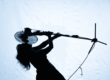
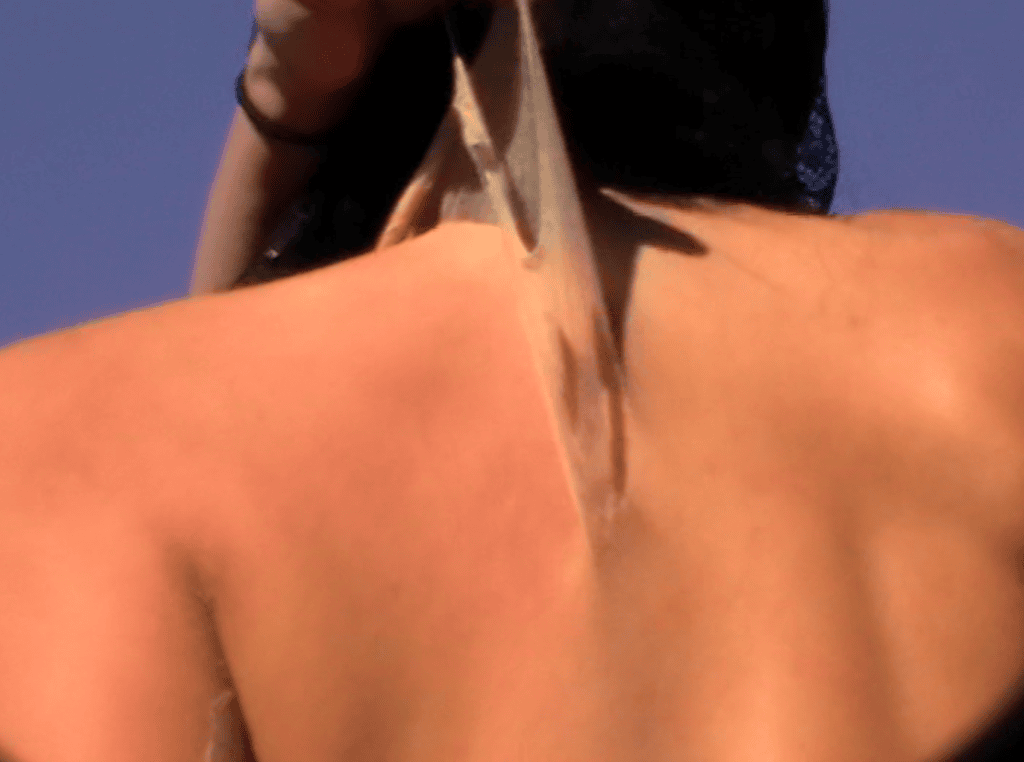
During the residency, 𝗥𝗮𝗱𝗮 𝗜𝘃𝗮 𝗦𝗶𝗯𝗶𝗹𝗮 developed a video work under the working title ,,𝗥𝗼𝗼𝗺 𝗻𝟱,” inspired by the ancient Villa dei Misteri in Pompeii. The frescoes in room five of this well-preserved Roman villa are traditionally interpreted as depicting the initiation of a bride into a mystery cult. This research intersects with Sibila’s engagement with Dorothy Cross’s Virgin Shroud (1993), in which a cowskin veil—its udders forming a crown around the head of an unseen Virgin—collides Christian iconography with animality, lineage, and the erotic charge of ritual garments. In Sibila’s work, this tension between the sacred and the corporeal becomes a lens through which to revisit the woman–animal archetype and the persistence of pagan motifs beneath supposedly classical narratives. Through a contemporary medium, “Room n°5” probes how bodies absorb and transmit ritual memory, how inherited symbols cling to skin, fabric, and gesture, and how personal and collective mythologies are continually rewritten through the spaces they inhabit.
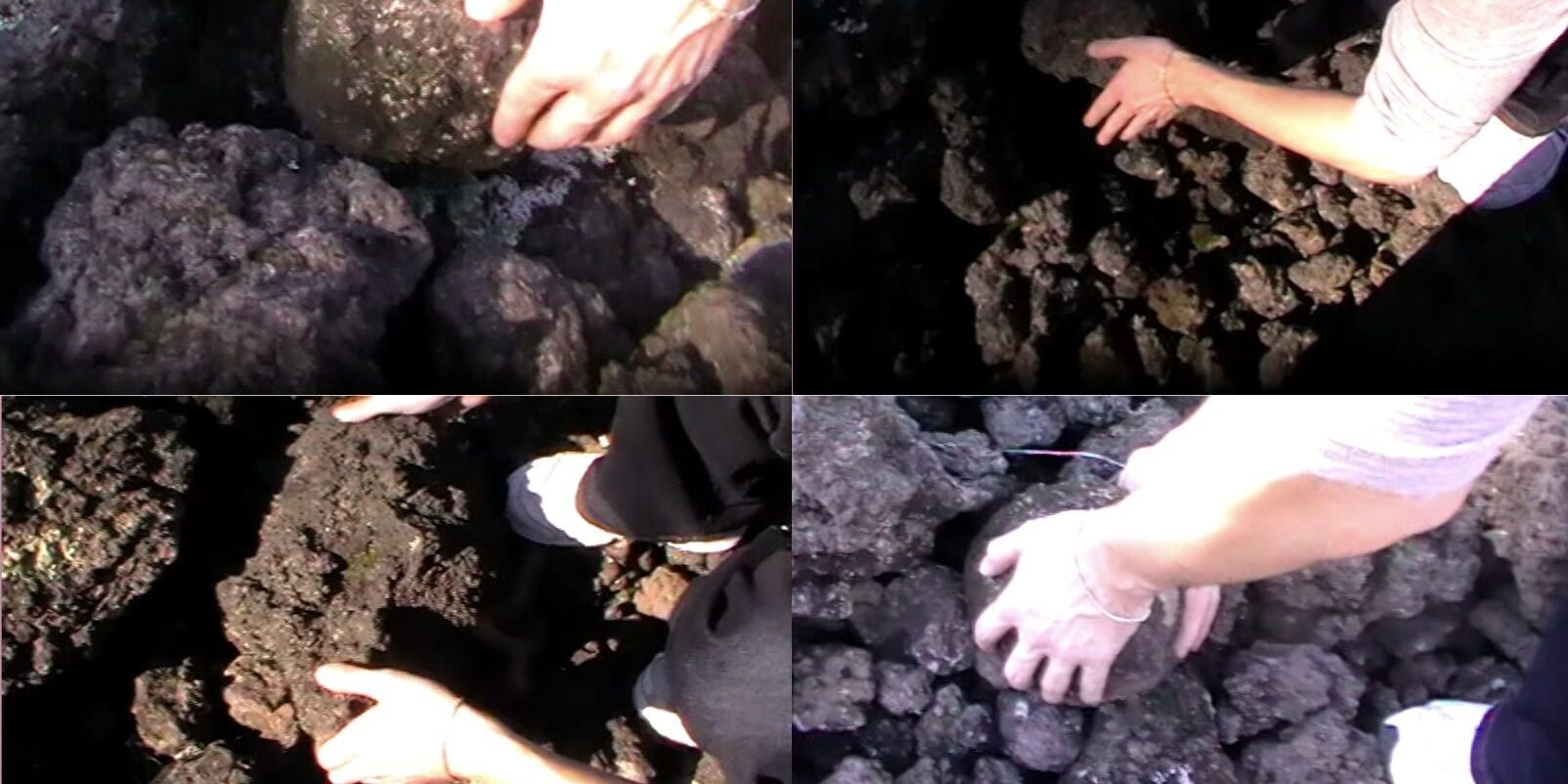
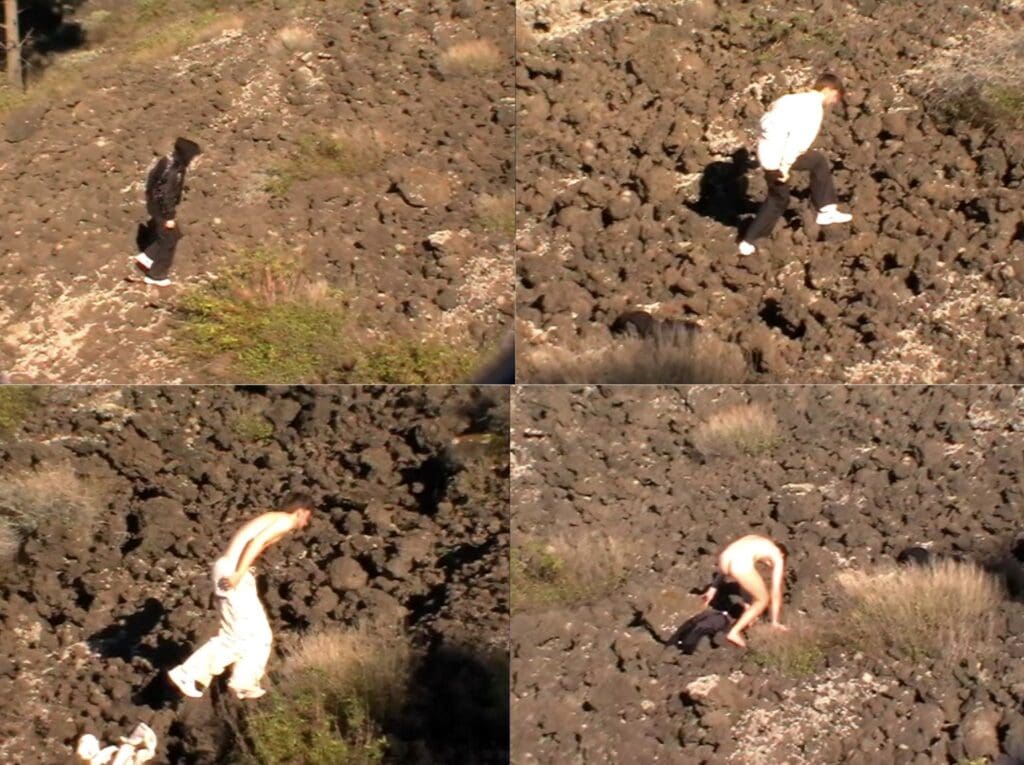
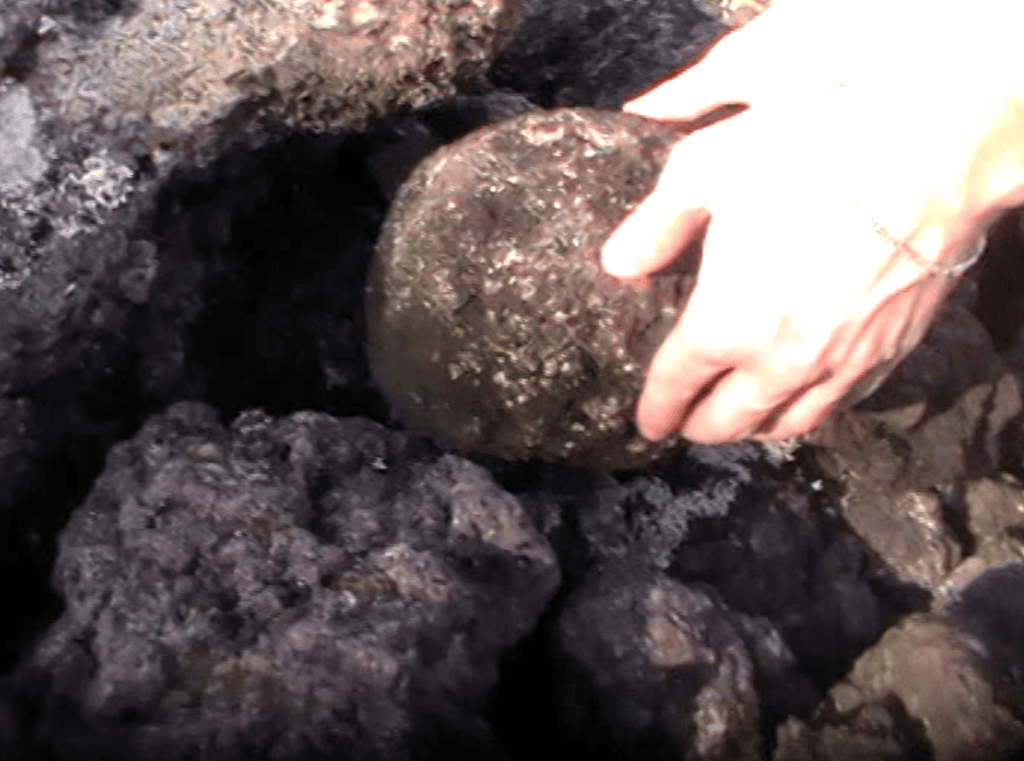
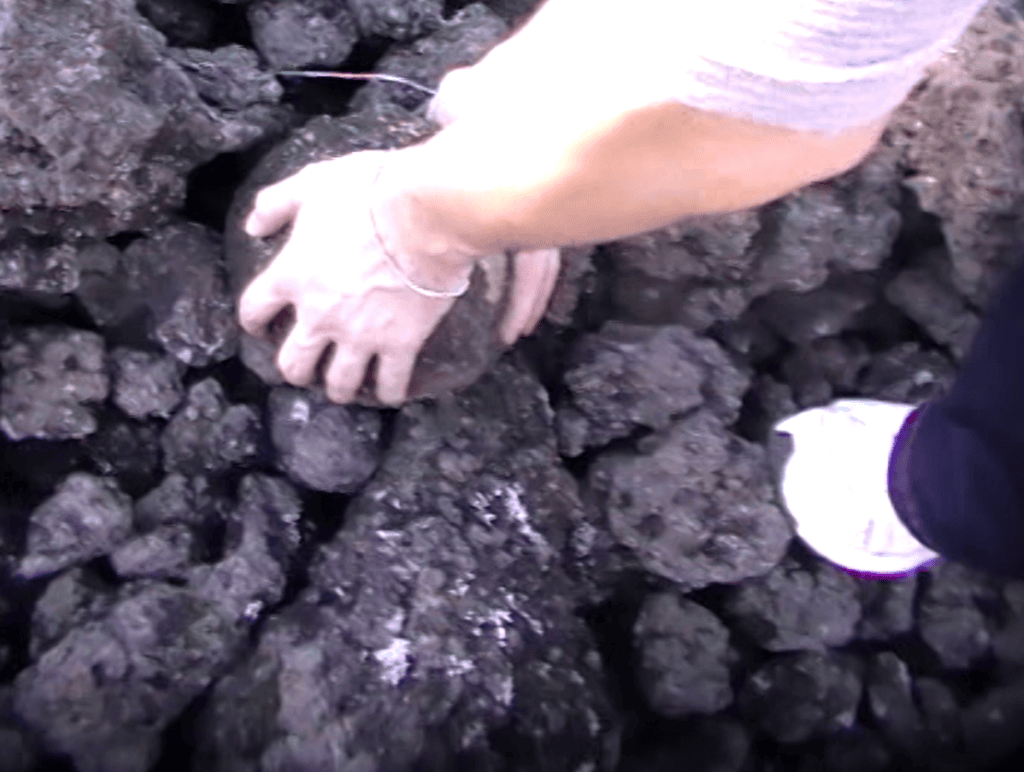
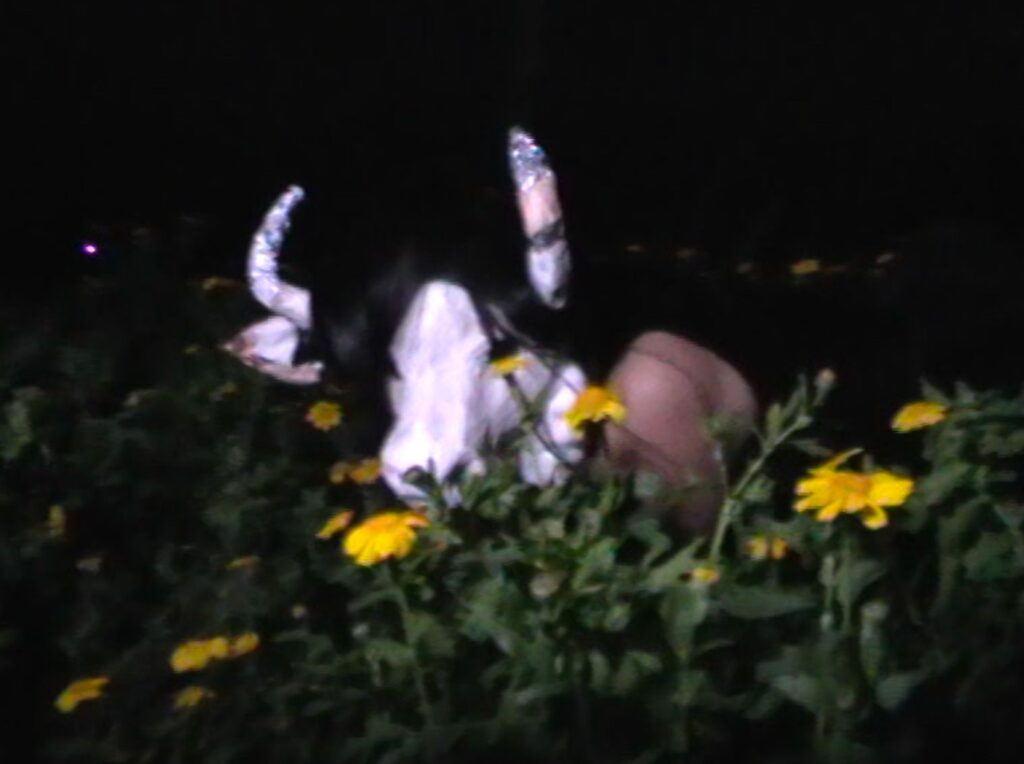
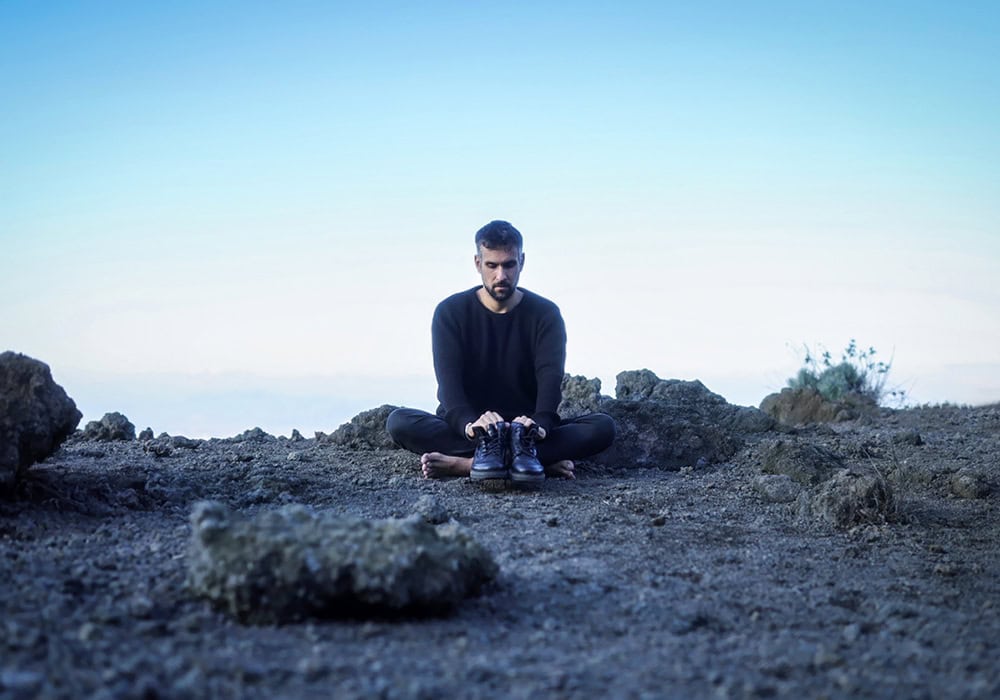
𝗞𝗮𝗿𝗹𝗼 Štefanek continued his series of self-portraits, Self-titled (2022–), developing the performance and video work ,,𝗕𝗼𝘂𝗹𝗱𝗲𝗿𝘀 (𝗪𝗼𝗿𝗸𝗶𝗻𝗴 𝗧𝗶𝘁𝗹𝗲),” filmed at Fiume di Lava on the slopes of Vesuvius. Inspired by the myth of Sisyphus, the work explores physical endurance, cyclicality, and the existential tension of contemporary life, blending mythological references with personal and bodily experience. Across this fractured landscape, Štefanek performs an act of reassembly, lifting and repositioning volcanic rocks, echoing a desire to impose temporary order on forces far beyond human scale. Parallel to this material reordering is the shedding and reclaiming of layers, as clothing is removed, abandoned, and later retrieved in a loop of undoing and redoing that transforms the terrain into a living archive of the body’s past decisions. In this oscillation—between stripping and reassembling, climbing and descending, undoing and reconstructing—Štefanek illuminates the contemporary condition: the continuous work of composing oneself within unstable terrain.
Toni Mijač expanded his multimedia project ,,Katarza,” which engages in introspective explorations of male identity and psychoanalytic aspects of everyday life. During the residency, the artist incorporated a self-portrait into the series for the first time, thereby extending the very structure of the project.
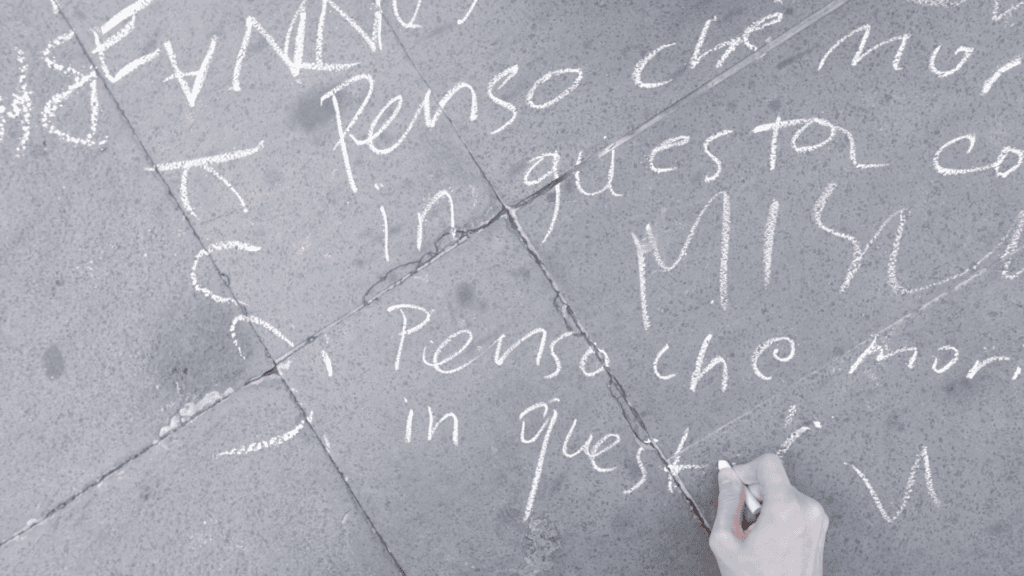
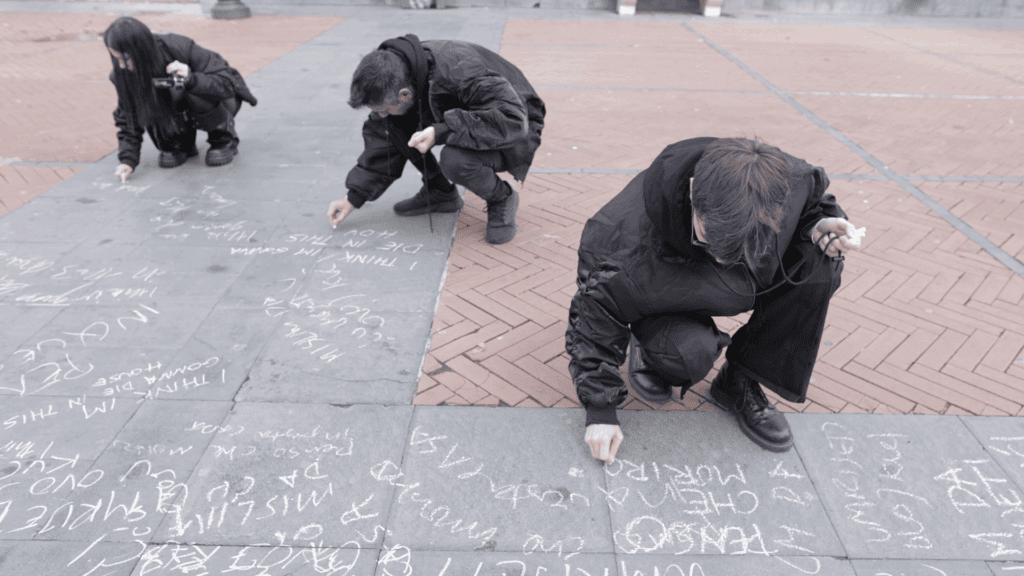
Alongside their individual projects, the three artists collaboratively developed a work titled ,,I think I’m gonna die in this house,” inspired by the phenomenon of memento mori. During the performance, the artists, dressed in black, wrote out the lyrics of Charli XCX’s song – I think I’m gonna die in this house –in Italian, English, and Croatian, using chalk on the main square of Somma, until they ran out of chalk and completed the cross made of stone blocks that adorns the square. The work merges the local context of Vesuvius with a pop-cultural reference, conveying a zeitgeist of uncertainty and instability in everyday life. Through the performance, memento mori becomes an emotional reminder of life’s transience and finitude, fostering a need for release, crossing conditioned boundaries, and transformation, while reflecting the tension between existential insecurity and the Italian optimism of life — la vita è bella.
The works developed during the residency will be presented through individual exhibitions, and a collective presentation is planned for summer 2026, during the final phase of the Biennale del Vesuvio. The Queering the Myth residency thus continues the mission of Collettivo Zero and Domino in promoting critical and socially engaged approaches to cultural and historical narratives, fostering international collaboration, and creating a space for subversive, experimental, and innovative artistic practices.
Karlo Štefanek is a multidisciplinary artist whose practice explores how identity is constructed, deconstructed, and reconstructed through the mediums of self-portraiture and performance. Štefanek has exhibited at international venues such as the Croatian Pavilion at the Venice Biennale (group exhibition By the Means at Hand initiated by artist Vlatka Horvat), the Stedelijk Museum in Amsterdam, the Museum of Contemporary Art in Zagreb, and festivals including Becoming (Amsterdam), SerformanceP (São Paulo), and Perforations (Zagreb). In 2025, the artist’s solo exhibitions are scheduled at the HDLU (Osijek), KIC (Zagreb), Vagon Gallery (Banja Luka), and an upcoming presentation at the 60th Zagreb Salon, Youth Biennial (Belgrade), Okolo Around (Zagreb) and Perforations (Buenos Aires). Štefanek lives and works between Zagreb, Amsterdam, and New York.
Rada Iva Sibila (born in 2002, Zagreb) graduated from the School of Applied Arts and Design in 2021 and, in the same year, enrolled at the Academy of Fine Arts in Zagreb, Department of Animation and New Media. She completed her undergraduate studies in 2024 and is currently pursuing a master’s degree at the same department. Her artistic interests are primarily focused on contemporary visual and intermedia practices, with a particular fascination for approaches rooted in feminist critique and esoteric/subconscious practices. One of her main points of exploration is corporeality — examining the body and its physical and social conditioning. She has exhibited at the Semester and Final Exhibitions of the Academy of Fine Arts in Zagreb (2021, 2022, 2024), as well as in group exhibitions such as ALU Perspektiva at HDLU Zagreb (2024), Space in Transition at Galerija Putolovac in Zagreb (2024), and ALU/MET also at Galerija Putolovac in the same year. In 2024, she presented her work at Galerija Rupa and participated in the project Intimate Spaces of Everyday Life at the Ethnographic Museum in Zagreb, as well as in the PlesAdu Festival that same year. She also held a solo exhibition in Dublin at Pallas Projects/Studios (2024) and presented her work at the ZEZ Festival in Zagreb (2024). In 2023, she received the Rector’s Award for the project Opera Amfitrion (Academy of Fine Arts, Zagreb).
Toni Mijač (born in 1988, Split) holds a bachelor’s degree in Film and Video from the Arts Academy in Split and a master’s degree in New Media from the Academy of Fine Arts in Zagreb. He has gained professional experience through various artistic and commercial projects, participating in numerous multimedia works, films, workshops, festivals, and happenings. For six years, he actively led film schools for elementary and high school students in Split and Zagreb. He has exhibited his work in galleries and institutions including Klovićevi dvori Gallery, the Museum of Contemporary Art Zagreb, NMGO@Praktika, Greta Gallery, GMK, Pogon Jedinstvo, KSET, GrisiaYouth, Art-Kino Rijeka, and London Metropolitan University. In his artistic practice, he primarily explores impulses of everyday life across different aspects of human experience, using the language and expressive tools of various media such as film, video, text, installation, photography, and social practice.