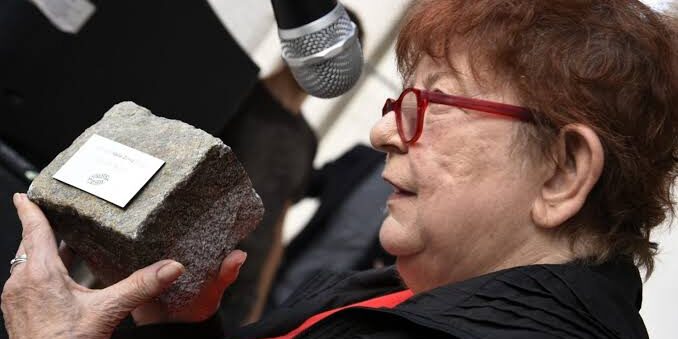
Tonight, Fond za druge presented the Nada Dimić and Vesna Kesić Awards, recognizing individuals and initiatives whose work contributes to building a more just, solidaristic, and free society.
This year’s jury, consisting of Barbara Blasin, Danka Derifaj, Sanja Despot, Snježana Pavić, Bruno Isaković, and Zvonimir Dobrović, decided that the 2026 Nada Dimić Award would go to the Putevima goranskih mirovnjaka Initiative and Marija “Maruška” Mileta, while the Vesna Kesić Award for Journalism was awarded to Slavica Lukić.
Fond za druge was established in 2017 to support artistic, activist, and civic initiatives that contribute to the development of an open and democratic society through small and micro-grants. In addition to providing financial support to various projects, Fond za druge annually presents the Nada Dimić and Vesna Kesić Awards to individuals and initiatives whose work exemplifies civic courage, social responsibility, and engagement in the public interest.
The Putevima goranskih mirovnjaka Initiative was recognized for preserving the memory of people who, during the wars of the 1990s, chose cooperation, solidarity, and saving human lives despite national divisions and violence. Built around Valentina Otmačić’s research into peace activists from Gorski Kotar, the initiative has in recent years brought almost forgotten examples of civic courage and peacebuilding back into collective memory through commemorative walks and public programmes. In a time marked by new wars, militarization, and growing social divisions, the jury emphasized that the initiative is a powerful reminder that peace is not passivity, but an active social choice that must be nurtured and passed on to future generations.
Jury statement on the Putevima goranskih mirovnjaka Initiative
History studies wars; there are no lessons about peace in our textbooks. At school, we learn how people fought and who won, rather than how they made peace. Valentina Otmačić recognized how urgently lessons about peace are needed in a time of global war, violence, and killing, bringing the story of the peace activists of Gorski Kotar out of oblivion. A professor who leads the Centre for Peace and Conflict Studies in Rijeka, she wrote the book Oases of Peace in the Post-War Years. She researched and documented examples from Tuzla and Gorski Kotar, where local residents made extraordinary efforts to ensure that as few people as possible would lose their lives.
In Gorski Kotar, she documented an admirable collaboration between members of the Croatian and Serbian communities who joined forces with a single goal: to save lives. And they succeeded. In the 1990s, while nationalist madness and violence raged around them, they worked together and did everything they could to prevent anyone from being killed.
In their memory, a group of people came together with Valentina to form the Putevima goranskih mirovnjaka Initiative. Since 2024, they have organized an annual commemorative walk in their honour, reminding us that another path exists: the path of peace.
In a world where political elites present militarization as an imperative, where we witness genocide in real time, and where international law has become a dead letter, the only possible salvation is the path of peace. In such a world, initiatives like Putevima goranskih mirovnjaka are beacons in threatening darkness, lights showing the way. We thank them. They remind us that it is possible, that war has an alternative, that peace is worthwhile, and that there are examples to follow and principles we must not abandon. These are lessons we must teach children, because the solution can never be, and should never be, violence and war.
These are also the values represented by the Nada Dimić Award jury, and we are pleased to present this award to the initiative.
Jury statement on the Nada Dimić Award for Marija “Maruška” Mileta
This year, the Nada Dimić Award is presented to Marija “Maruška” Mileta, an activist and organizer of the Zagreb anti-fascist march United Against Fascism, which brought around 10,000 protesters together in Zagreb on 30 November 2025. Marija Mileta was not only the formal organizer of the Zagreb march but also helped coordinate demonstrations under the same name in Rijeka, Zadar, and Pula. The United Against Fascism gatherings were primarily focused on defending democratic and constitutional values as the foundations of the contemporary constitutional democracy of the Republic of Croatia.
There were many reasons for such gatherings and protests over the past year. Exactly one year ago, on 4 July 2025, ahead of Marko Perković Thompson’s concert at the Zagreb Hippodrome, the streets in the very centre of Zagreb echoed with Ustaša songs and slogans, accompanied by inadequate action on the part of the police, which resulted in only a few sporadic misdemeanour charges, mostly related to the use of prohibited pyrotechnics. We subsequently witnessed the Ustaša salute being shouted within the Croatian Parliament itself, the country’s legislative body, without legal sanctions or sanctions under the Rules of Procedure of the Croatian Parliament by the presiding officer.
This was followed by numerous incidents in which cultural programmes organized by various organizations were labelled “hostile” or “unpatriotic”, accompanied by open threats of violence. The situation escalated in early November with the violent disruption of the Days of Serbian Culture programme in Split, followed by a similar incident in Zagreb.
The United Against Fascism initiative emerged as a rapid and appropriate response to what its organizers described as “pervasive violence, fear, threats, and bans in Croatian society”. In just one month, it brought together more than 30 collectives, associations, and initiatives, while receiving massive public support.
However, the Zagreb Police Department, First Zagreb Police Station, initiated misdemeanour proceedings against Marija Mileta, organizer of the Zagreb United Against Fascism march, citing “banners disturbing public order and peace”. Two days ago, on 2 July, the Municipal Misdemeanour Court acquitted Marija Mileta, ruling in its first-instance judgment that no offence had been committed and that the police had failed to substantiate the charges.
Our position is that this case is not fundamentally about a misdemeanour, but about the very foundations of a democratic order: freedom of expression, the right to peaceful assembly, and the right of citizens to participate without fear in public demonstrations concerning matters of general interest.
Marija “Maruška” Mileta is a journalist by profession and has worked successfully for more than 15 years with environmental and human rights initiatives and organizations such as Zelena akcija and the Nepokorena Palestina collective. Her work is guided, as she puts it, by the principles of “solidarity, justice, and intersectionality”. With this award, we wish to recognize her work to date and support her future activism.
With this award, we send a clear message:
Intimidation will not prevail.
Anti-fascism is not a misdemeanour.
Solidarity is not a threat.
The 2026 Vesna Kesić Award for Journalism goes to Slavica Lukić, one of Croatia’s most prominent investigative journalists. The jury highlighted her long-standing and persistent work exposing irregularities in the financing of the private healthcare institution Medikol, a subject she has investigated for more than fifteen years despite considerable pressure and legal proceedings. Thanks to her professional integrity and perseverance, the case has remained in the public eye and raised important questions about the management of public funds, institutional accountability, and the role of investigative journalism in a democratic society.
Jury statement on the Vesna Kesić Award for Slavica Lukić
Slavica Lukić published her first article about Medikol 15 years ago. On Friday, the Croatian Parliament rejected, by a majority vote of the ruling parties, the establishment of a parliamentary investigative commission. Behind the major campaign led by Ivana Kekin and Možemo concerning the Medikol case lies the persistent, long-term work of one journalist: Slavica Lukić of Jutarnji list.
Since 2011, Slavica Lukić has been reporting on and insisting on scrutiny of the private clinic to which the Croatian Health Insurance Fund (HZZO) has paid €200 million over nearly two decades for PET-CT scans. This year alone, the amount paid to the clinic will be more than double the cost of purchasing all the necessary equipment for public hospitals. What kind of deal is this? Where does the money go? Why does the parliamentary majority refuse an investigation if they are convinced that everything is above board?
In 2011, Slavica Lukić published the first in a series of articles on the Medikol case, which subsequently exposed her to lawsuits and pressure. Medikol sued her twice. In 2022, the Constitutional Court ultimately dismissed the lawsuit and ruled that the spending of public money in healthcare is a matter of public interest. A victory.
Because of her reporting on Medikol, Slavica Lukić became the first journalist convicted, in 2014, of the criminal offence of “shaming”. The journalistic community protested strongly, and ultimately the law had to be changed. Her victory was a victory for all journalists.
At a difficult time for journalism, both in Croatia and globally, Slavica Lukić stubbornly insists on a classical understanding of journalism’s role in serving the public, the rule of law, and democratic institutions. A journalist’s job is to be critical and uncomfortable, to question those in power and institutions wherever she encounters illegality and disorder — and she does this persistently and wholeheartedly.
Slavica is one of those figures who could be the subject of a film: she will not give up, even when everything is against her. She does not give up even when it seems that the values she advocates in her reporting — justice, integrity, and the public good — no longer matter to anyone and can only cause her harm. Vesna Kesić would have been happy to see this award go to Slavica Lukić.
Due to health reasons, Slavica Lukić was unable to attend the ceremony. In her message to those gathered, she said:
“I am sorry that tonight I am unable to share the joy of receiving this award with you. Awards are always a beautiful sign that, no matter how tempted we sometimes are to give up, our work as journalists is not in vain. They encourage us to persevere even when things are at their most difficult.
However, an award bearing the name of an extraordinary woman, Vesna Kesić — a journalist, researcher, and activist who was among the first to persistently raise public awareness of inequalities and social deviations that are swept under the rug — warms the heart in a special way. It is a great honour to receive an award bearing her name. I see it as keeping alive the flame of tireless critical inquiry that Vesna embodied and fought for throughout her life.”
The Nada Dimić Award was established in 2017 in honour of anti-fascist and revolutionary Nada Dimić. It is awarded to individuals and collectives whose work promotes civic equality, solidarity, and social responsibility.
The Vesna Kesić Award is named after the distinguished journalist, writer, and feminist. It recognizes journalists whose work uncompromisingly defends the public interest, questions centres of power, and protects the values of democracy, human rights, and social justice.
Fond za druge operates exclusively through private donations. Through its grants and awards, it continues to build a space for solidarity, civic courage, and artistic freedom in Croatia.